Event Marketing vs Experiential Marketing Guide
7/23/2026
By Lily McDowell
Event marketing vs. experiential marketing: what's the difference? Event marketing focuses on planning, promoting, and executing a specific occasion, such as a product launch, conference, or trade show, to generate awareness, leads, or sales. Experiential marketing is broader. It centers on creating immersive, interactive brand experiences, whether at an event or elsewhere, that foster emotional connections and memorable engagement.
In short, event marketing is the vehicle; experiential marketing is the strategy. While event marketing prioritizes reach and visibility, experiential marketing focuses on making every touchpoint memorable and participatory. The two approaches are closely related but serve different purposes, and choosing the wrong one for your goals can lead to wasted budget and missed opportunities. The most effective campaigns know when, and how, to use both.
What Is Event Marketing?
Event marketing is the practice of organizing or participating in events such as trade shows, product launches, conferences, and sponsorships to promote a brand, product, or service. Its primary goals are to increase brand awareness, generate leads, and expand audience reach. The communication is largely one-directional: brands present information while audiences receive it.
Common formats include hosted events, sponsored events, trade shows, conferences, and virtual experiences. Success is typically measured through attendance, impressions, and leads generated. According to EventTrack 2026 (Event Marketer) , 61% of consumers are more likely to purchase from a brand after attending one of its events. To see how leading companies put this strategy into practice, explore how brands use events to build loyalty.
What Is Experiential Marketing?
Experiential marketing is a strategy focused on creating immersive, interactive, two-way engagements that invite consumers to actively participate with a brand rather than passively observe it. The emphasis is emotional and sensory: the goal is to create a memorable experience that builds lasting brand connection, not simply deliver information.
Common formats include pop-up activations, brand installations, product sampling experiences, and AR or VR activations. Success is measured less by attendance and more by brand sentiment, recall, social sharing, and affinity. EventTrack research also found that 91% of consumers said participating in a brand's events and experiences makes them more likely to purchase, provided it was a product they were already interested in.
Event Marketing vs Experiential Marketing: Side-by-Side Comparison
When comparing event marketing and experiential marketing, the biggest differences come down to intent, the audience's role, and how success is measured. The two approaches are closely related, but they are not interchangeable.
| Criteria | Event Marketing | Experiential Marketing |
|---|---|---|
| Primary Goal | Brand awareness, lead generation | Emotional connection, brand affinity |
| Audience Role | Passive attendee | Active participant |
| Engagement Style | One-way, informational | Two-way, immersive, interactive |
| Key Success Metric | Attendance, reach, cost per lead | Brand sentiment, brand recall, earned media |
One of the most common misconceptions is that experiential marketing is simply a type of event. It isn't. Experiential marketing is a strategy for creating meaningful engagement that can take place within an event or exist independently of one. An event is a point in time; an experience is what people remember afterward.
Events can absolutely be experiential when they are designed to encourage participation, interaction, and emotional connection, but not every event does this by default. A trade show booth where a representative hands out brochures is event marketing. That same booth transformed into a hands-on product demonstration with an immersive environment becomes experiential marketing.
In many cases, the difference comes down to execution rather than format. For practical examples of how brands bring these strategies to life, explore these brand activation ideas.
Why Experiential Marketing Creates Strong Brand Memory
Experiential marketing creates stronger brand memories because it engages multiple senses and encourages active participation rather than passive observation. This activates more neural pathways, making the experience easier to remember and more meaningful.
The neuroscience behind benefits of experiential marketing helps explain why immersive experiences consistently outperform traditional advertising in recall and trust. Episodic memory, which is formed through direct participation, is stored more durably than semantic memory, which is how the brain processes facts and information received passively. Novel, positive experiences also trigger dopamine release, strengthening memory consolidation.
This is why attendees often trust brands more after experiential activations. The experience doesn't just communicate a message; it creates a genuine memory that consumers associate with the brand.
For marketers, these insights have practical value. Start by defining the goal of your experiential marketing campaign, understanding your audience, and selecting the experience that best supports both. Knowing why experiential marketing works neurologically helps brands design more effective activations and build a stronger case for investment.
When to Use Experiential Marketing vs Event Marketing
The right marketing approach depends on your goals, your audience, and the outcome you want to achieve.
Event marketing is often the better choice when your priority is large-scale B2B lead generation, maximizing reach for a product launch, or establishing a presence at trade shows and industry conferences. If attendance, impressions, and lead volume are your primary KPIs, event marketing is designed to deliver broad visibility at scale. According to the Content Marketing Institute's 2025 B2B Benchmarks report, in-person events are the most effective content distribution channel for B2B marketers, cited by 52% of respondents, ahead of webinars, email, and social media.
Experiential marketing is the stronger choice when your goal is to build emotional brand connection, introduce a product through hands-on interaction, reposition a brand, or engage audiences where word-of-mouth and brand recall matter most. It is especially effective with younger consumers. Eventbrite research found that 78% of Gen Z would rather spend money on experiences than material possessions, reinforcing why experiential campaigns resonate with experience-driven audiences.
Many of the most successful campaigns combine both approaches, using events to generate reach and experiential marketing to create lasting engagement. For ideas on how to bring the two together, explore these experiential marketing tactics.
Looking to Build a Successful Experiential Event for Your Brand?
As an independent, full-service experiential and college marketing agency with more than 20 years of experience, Newbridge helps brands create campaigns where event reach and experiential engagement work together rather than compete. With strategy, creative, staffing, and execution all under one roof, we eliminate the disconnects that often occur between planning and on-site execution.
Our core services include:
- Experiential Marketing: Live brand activations, pop-up shops, mobile tours, product sampling campaigns, and PR stunts.
- College Marketing & Media: On-campus programs, student ambassador campaigns, and digital media built specifically to reach college audiences.
- Staffing & Recruitment: Recruiting, training, and managing brand ambassadors and event staff to execute programs at scale.
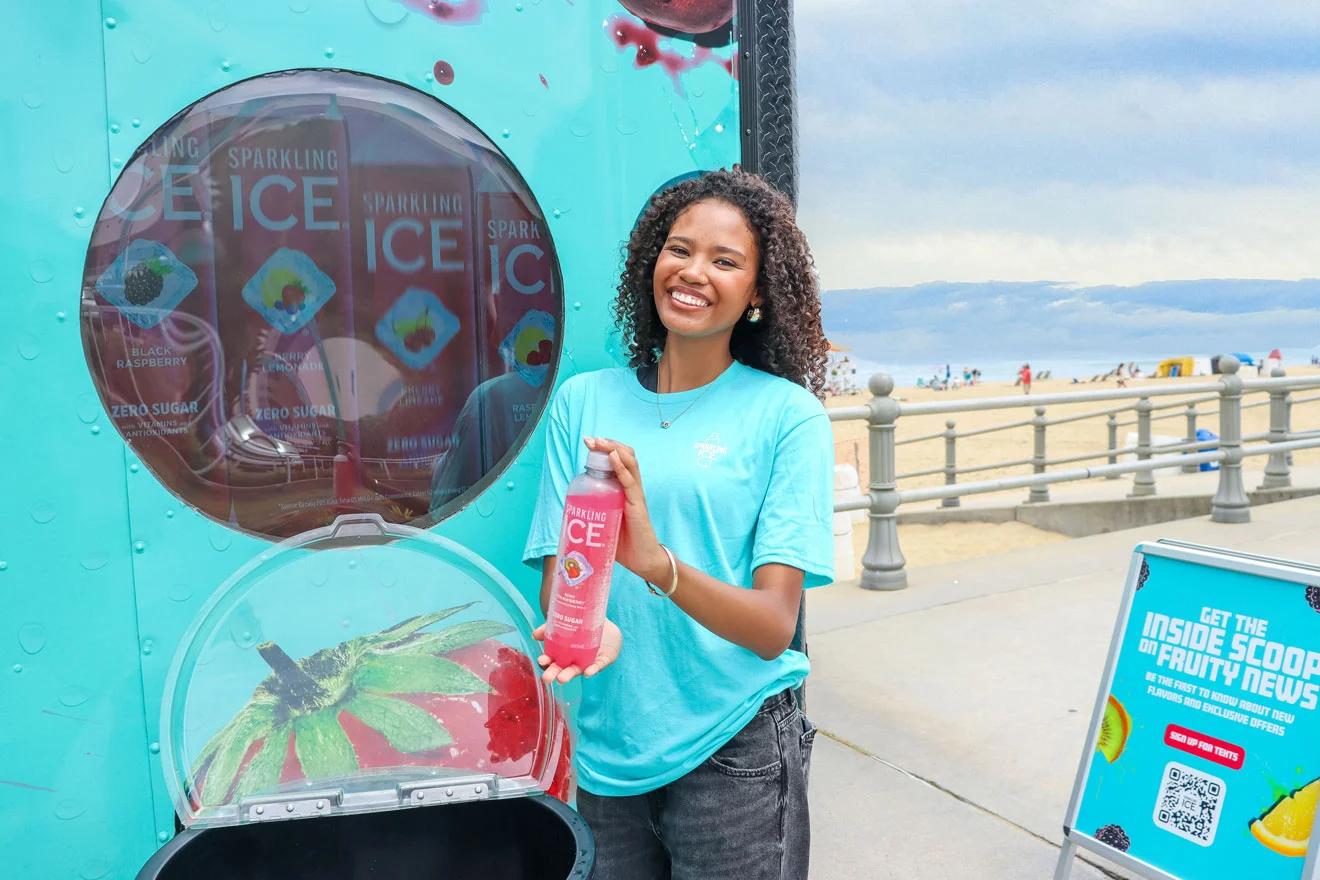
That integrated approach has helped Newbridge deliver award-winning campaigns for brands including Stanley, KIND, Pocari Sweat, Timberland, Jack Link's, and Suja Organic. Recognized on the 2025 Chief Marketer Top Agencies list and the 2025 Event Marketer IT List, our team specializes in creating experiences that drive meaningful engagement and measurable results.
Whether you're planning a national event tour, a campus activation, or a targeted experiential campaign, Newbridge can help you create experiences that connect with audiences and leave a lasting impression.
FAQs about Event Marketing and Experiential Marketing
Here are answers to some of the most common questions about event marketing and experiential marketing.
What Is the Difference Between Event Marketing and Experiential Marketing?
Event marketing promotes a specific occasion, such as a product launch, trade show, or conference, to generate awareness, leads, or sales. Experiential marketing is a broader strategy focused on creating immersive, two-way brand interactions that build emotional connections, whether they take place at an event or independently.
What Is Considered Event Marketing?
Event marketing includes any organized effort to promote a brand through a specific occasion, including trade shows, conferences, product launches, sponsorships, and hosted events. Success is typically measured by attendance, impressions, and lead generation.
What Is Experiential Marketing?
Experiential marketing is a strategy centered on immersive, interactive brand experiences that invite consumers to actively participate rather than passively observe. Common formats include pop-up activations, product sampling, brand installations, and AR or VR experiences. Success is measured through metrics such as brand sentiment, recall, engagement, and social sharing.
Can an Event Be Both Event Marketing and Experiential Marketing?
Yes. The two approaches are complementary rather than mutually exclusive. A trade show booth that simply distributes brochures is event marketing. That same booth becomes experiential marketing when it incorporates hands-on product demonstrations, interactive elements, or immersive storytelling. The difference lies in the experience, not the format.
How Do You Measure ROI for Experiential Marketing?
Because experiential marketing is designed to build lasting brand connection, ROI extends beyond traditional lead generation. Brands typically measure success through brand recall, sentiment, social engagement, repeat interaction, and downstream actions such as website traffic, product purchases, or social mentions following the campaign.
Related Content
How to Do a Pop-Up Shop Successfully for Your Brand
A practical guide to planning and executing pop-ups that drive engagement, brand awareness, and ROI.
Newbridge Named One of Chief Marketer’s Top Marketing Agencies for 2025
Celebrating standout work in experiential and college marketing and looking ahead to a big year of growth, creativity, and connection.
Top Back-to-School Marketing Ideas for College Brands
Top back-to-school marketing ideas for college brands in 2026. Learn how move-in week, campus activations, and student ambassadors drive real ROI.