CPG Sampling Blueprint: Running Campaigns That Drive Sales
8/28/2026
By Lily McDowell
CPG sampling is one of the most direct ways to turn a prospective buyer into a first-time customer. It involves distributing free units of a consumer packaged goods product to encourage firsthand trial. It differs from generic product sampling because the CPG category comes with its own challenges: short purchase cycles, intense competition for shelf space, and purchase decisions often made impulsively and in the moment.
As a form of experiential marketing, sampling lets consumers experience a product before buying. A shopper who has tasted, smelled, or used a product is in a fundamentally different decision-making position than one who has only seen a digital ad. Sampling closes the gap between awareness and purchase in a way few other tactics can.
The stakes are significant. According to Grand View Research, the global consumer packaged goods market was valued at approximately $5.47 trillion in 2024 and is projected to reach $7.8 trillion by 2033, growing at a CAGR of 4.1% from 2025 to 2033. In a market that size, brands that earn early trial can start building lasting loyalty.
This guide covers the psychology behind why samples convert, how to plan and measure a full CPG sampling campaign, and what changing regulations mean for execution.
The Psychology Behind Why CPG Sampling Converts
Three psychological forces drive a successful sampling program.
Reciprocity. This principle is widely documented in behavioral research: when someone gives us something, we naturally feel more inclined to respond positively. Receiving a free product can create goodwill toward a brand and make consumers more receptive to purchasing.
Risk removal. One of the biggest barriers to trying a new CPG product is uncertainty about whether it's worth the money. A sample removes that barrier by allowing consumers to experience the product before committing to a purchase.
Sensory engagement. Taste, smell, and texture create a different kind of interaction than a scrolling ad. A well-executed sample creates a physical, sensory memory that can last beyond the moment of trial. The endowment effect can reinforce that connection: once consumers have held, tasted, or used a product, it can begin to feel more familiar and personally relevant, making the transition to purchase easier.
The format matters, too. Sampling programs that mirror how a product is naturally consumed tend to create a more authentic trial experience and give brands a more accurate indication of whether consumers are likely to purchase the product.
Types of CPG Sampling Campaigns
The right sampling format depends on the product, budget, target audience, and campaign objective.
In-Store and Retail Sampling:
- Sampling at or near the shelf can turn product trial into a purchase within seconds.
- This high-volume format works especially well for impulse categories like snacks, beverages, and personal care.
- Successful execution requires strong retailer partnerships and careful planning around staffing, inventory, and food safety compliance.
Event-Based and Experiential Sampling:
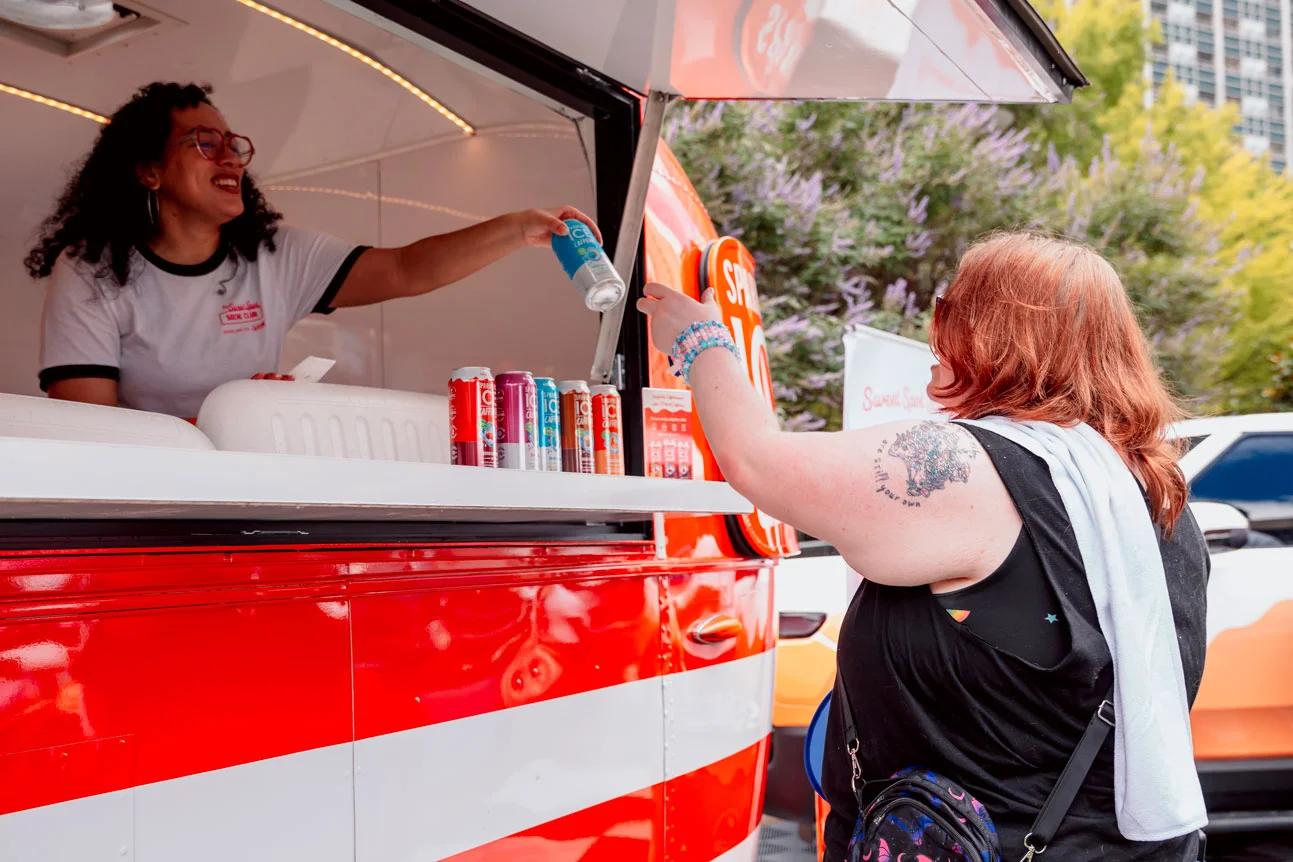
- Festivals, trade shows, and brand activations put products in the hands of consumers who are already in an exploratory mindset.
- These experiences can build stronger brand affinity and generate organic word-of-mouth beyond the initial interaction.
Digital-to-Physical Sampling:
- Sample requests, influencer mailers, and subscription boxes deliver products directly to targeted consumers.
- These programs can capture valuable first-party data, including email addresses, consumer preferences, and purchase intent.
- This format is especially effective for shelf-stable products and brands focused on digital-first discovery.
Together, these formats create an omnichannel sampling strategy that allows brands to reach consumers at multiple points throughout the purchase journey.
Sampling Examples: Newbridge Campaigns That Drove Trial
Kodiak — Nationwide Food Truck Tour
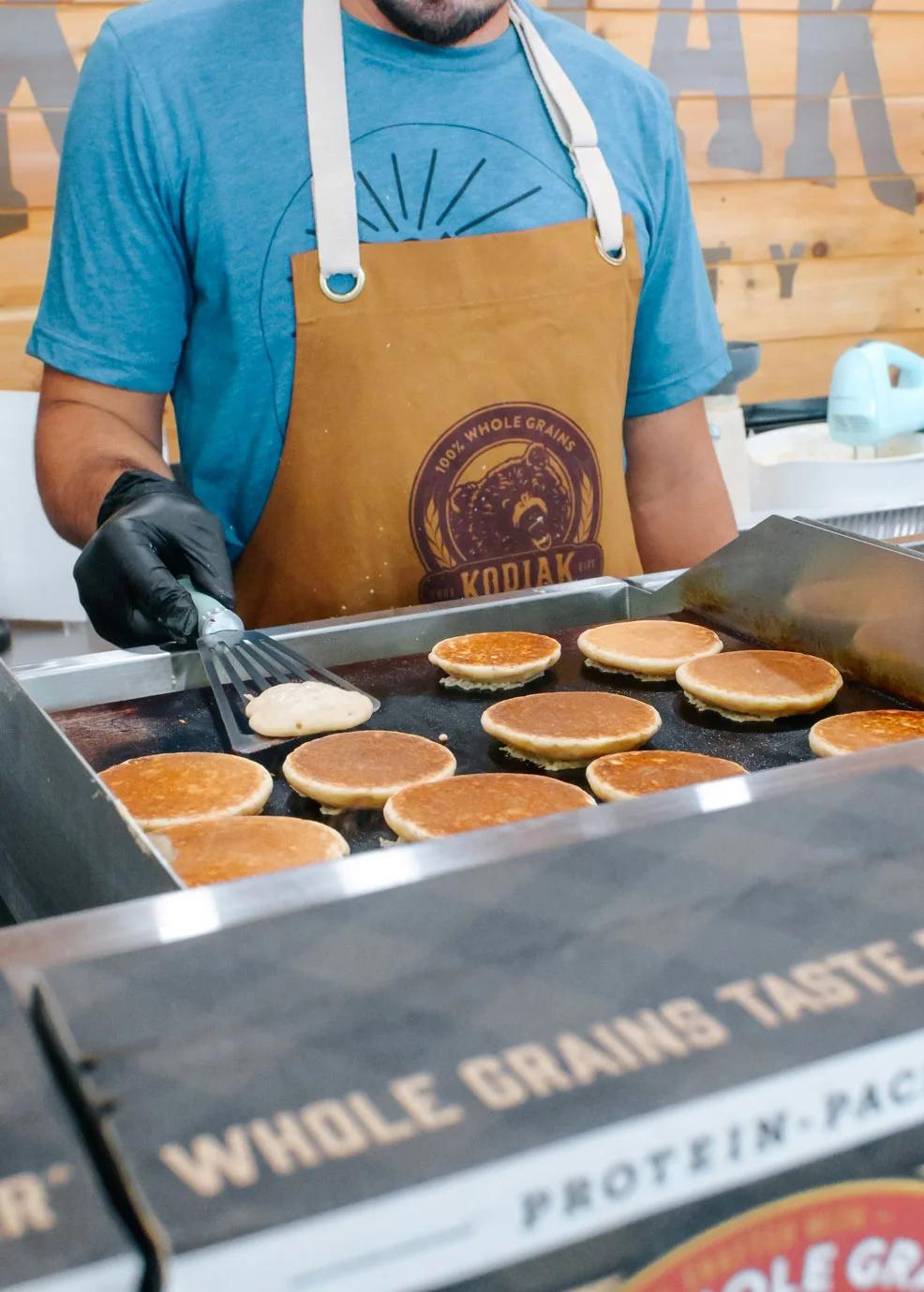
A custom-branded Kodiak food truck traveled to 40 high-traffic events across seven Western and Central U.S. markets over 10 weeks. The activation paired live pancake sampling with QR-driven data capture, reaching 717,000 attendees, distributing 138,957 samples, and generating 7.94 million total impressions.
KIND — World Kindness Day Campus Activation
A three-campus pop-up tour at UCLA, Ohio State, and the University of Utah combined product sampling with student-led social content centered around KIND's CHOOSE KIND message. The program distributed 51,000 KIND bars, generated 80,000 footprint impressions, and achieved a 6.4% social engagement rate.
Suja Organic + Vive Organic — Natural Products Expo West
A shared booth activation introduced both brands to key industry decision-makers at Expo West, using product sampling to drive trial and consideration within the natural and organic beverage category. The activation distributed 6,300 bottles and generated 12,000 engagements.
See our full portfolio for more experiential marketing and product sampling campaigns.
How to Build a Strategic Sampling Campaign
Start with the objective, because it determines everything else. A campaign designed to drive retail velocity in a specific market requires a different format, timeline, and measurement strategy than a national awareness campaign supporting a new product launch.
- A trial-focused campaign prioritizes placement, volume, and product accessibility.
- An awareness campaign may prioritize high-visibility environments, even if individual trial numbers are lower.
- A retail velocity campaign requires geographic concentration near specific retail locations and close coordination with trade marketing.
Define the audience precisely enough to guide tactical decisions. Go beyond broad demographics like "women 25–40." Instead, consider "health-conscious women 25–40 who already purchase protein snacks and live within 30 miles of specific retail locations." Combining contextual placement with geographic targeting in markets where retail distribution already exists can make a sampling program significantly more effective.
Build out the full plan. Beyond the objective and audience, a complete sampling strategy should account for:
- The sampling experience: Packaging, messaging, and a clear call to action
- Logistics: Product fulfillment, staffing, inventory, and cold-chain requirements for perishable products
- Timeline: Production, shipping, staffing, permitting, and retailer coordination should all be mapped well before launch
- Post-sample follow-up: Coupon codes, QR scans, CRM capture, loyalty enrollment, and other ways to continue the consumer relationship after trial
How to Measure the Impact
Measuring a sampling campaign starts with separating outputs from outcomes. Samples distributed are an output. Consumers who go on to purchase are an outcome—and that distinction is critical to understanding whether the campaign actually worked.
A practical framework has three layers:
- Output: Units distributed, events executed, and consumer interactions recorded.
- Outcome: Trial-to-purchase rate, repeat purchases in the weeks following the campaign, and SKU-level retail velocity before and after the sampling period.
- Impact: Cost per confirmed trial, sales lift compared with campaign investment, and changes in brand awareness or recall measured through post-campaign surveys.
Attribution remains one of the biggest challenges in field-based sampling. Unlike a digital ad, a brand ambassador handing out samples at a farmers market doesn't automatically generate click-through or conversion data. Measurement needs to be built into the sampling experience itself through tactics like event-specific coupon codes, QR codes connected to CRM platforms, loyalty enrollment, and other trackable calls to action.
The goal is to connect trial to action wherever possible, giving brands a clearer picture of what happened after the sample was distributed.
U.S. Sampling Regulations and Compliance
Build compliance into a CPG sampling campaign from the beginning. Requirements vary by product, sampling environment, and state or local regulations, particularly for programs involving in-store, event-based, or street sampling.
For food and beverage sampling, this may include allergen disclosures, food handling procedures, temperature controls, permits, and staff certifications. Cosmetic and household product samples may have additional requirements around labeling, packaging, product claims, and safe distribution.
Digital sampling programs also need to account for FTC disclosure requirements, particularly when free products are provided to influencers or consumers in exchange for reviews or social content.
Before launch, brands should confirm:
- Product labeling and allergen requirements
- Local permits and food-handling requirements
- Brand ambassador or staff certifications
- Storage, transportation, and temperature-control procedures
- Insurance requirements
- FTC disclosures for influencer or review-based sampling
- Any applicable state, local, retailer, or venue-specific regulations
For national campaigns, compliance requirements can vary by market, so review regulations as part of the planning and logistics process.
How Much Does a Sampling Campaign Cost?
The cost of a sampling campaign varies significantly based on scale, format, product requirements, and target audience. A localized in-store program will cost very differently than a multi-market experiential tour or nationwide sampling campaign.
Rather than starting with a fixed spend figure, brands should build a budget around campaign objectives, desired reach, and cost per trial. The primary cost components include:
- Product: Cost per unit multiplied by the number of samples distributed
- Packaging and fulfillment: Sample packaging, kitting, shipping, and cold-chain logistics when needed
- Staffing: Brand ambassadors, field managers, training, and travel
- Venue and event fees: Retail activation fees, sponsorships, permits, or space rental
- Agency and management: Strategy, planning, logistics, and campaign execution
- Data capture and follow-up: CRM integration, coupon tracking, surveys, and post-sample outreach
The most effective budget is built around what the campaign needs to accomplish, not a predetermined cost per activation.
Not Sure How to Start? Partner with Newbridge Marketing
CPG sampling remains one of the most direct ways to turn product trial into purchase. From understanding why samples work to navigating regulations and measuring business impact, the difference between a campaign that drives results and one that simply distributes product comes down to strategic planning and experienced execution.
Newbridge is an independent experiential and college marketing agency with more than 20 years of experience helping CPG brands design and execute sampling campaigns that reach the right consumers in the right environments. We handle strategy, creative, production, staffing, and logistics under one roof, giving brands one experienced partner from planning through execution.
Our work has earned Newbridge recognition as one of Chief Marketer's Top Experiential Marketing Agencies and a spot on Event Marketer's IT List.
Ready to plan your next CPG sampling campaign?
Related Content
How to Do a Pop-Up Shop Successfully for Your Brand
A practical guide to planning and executing pop-ups that drive engagement, brand awareness, and ROI.
Newbridge Named One of Chief Marketer’s Top Marketing Agencies for 2025
Celebrating standout work in experiential and college marketing and looking ahead to a big year of growth, creativity, and connection.
Top Back-to-School Marketing Ideas for College Brands
Top back-to-school marketing ideas for college brands in 2026. Learn how move-in week, campus activations, and student ambassadors drive real ROI.